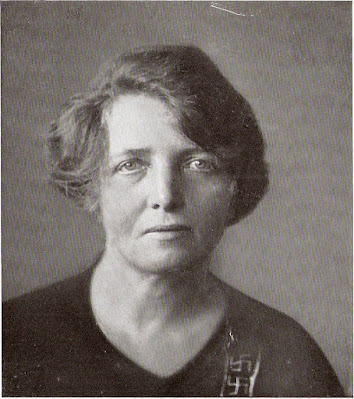
Rational Pluralism (Mathilde Ludendorff transformed) and Taoism
Rational Pluralism's Approach to Taoism: Pluralistic Harmony with the WayIntroductionRational Pluralism, as a scientifically attuned religion, reframes existence through a pluralistic metaphysics: multiple irreducible essences—fundamental forces like continuity (persistence across generations), emergence (complexity from simplicity), adaptation (resilience to change), aesthetics (beauty beyond utility), goodness (ethical harmony), truth (epistemic clarity), beauty (aesthetic unity), and relationality (discerning bonds of love and aversion)—interact without singular unification. Informed by evolutionary biology, quantum indeterminacy, and a pluralized Kantian noumena (diverse forces manifesting phenomena), it posits life's aim as conscious participation in these essences, yielding "God-living": a timeless, purposeless fulfillment achieved pre-death.Taoism, an ancient Chinese philosophy-religion originating in the 6th-4th centuries BCE with texts like Lao Tzu's Tao Te Ching and Zhuangzi's writings, centers on the Tao (the Way)—an ineffable, eternal principle underlying all reality, beyond description. Key concepts include wu wei (effortless action), yin-yang (complementary opposites), te (virtue/power), ziran (naturalness), and relativism (perspectives as contextual). Taoism seeks harmony with the Tao through simplicity, non-interference, and intuitive living, rejecting rigid structures.Rational Pluralism approaches Taoism with deep affinity yet refinement: it values Taoism's fluid harmony and non-dualism as echoing essence-interplay but critiques its monistic vagueness as potentially passive. This essay examines similarities (e.g., effortless balance), differences (monism vs. pluralism), critiques (e.g., wu wei's risks), and synergies (e.g., yin-yang pluralism), portraying RP as an evolutionary extension of Taoist wisdom.Similarities: Shared Visions of Harmony and TranscendenceRational Pluralism and Taoism converge in their pursuit of harmonious existence beyond ego-driven strife. Taoism's Tao as the source of all, flowing naturally without force, aligns with RP's essences: an interplay fostering adaptation and relationality, like the Tao's effortless generation of the ten thousand things. Wu wei—acting in accord with nature—parallels RP's free-will alignment with essences, transcending purposive utility for timeless fulfillment.Both emphasize discernment: Taoist relativism (Zhuangzi's dream paradoxes) echoes RP's relational essence—discerning perspectives without absolutism, promoting tolerance. Yin-yang's complementary duality resonates with RP's plural balance: opposites (e.g., love/aversion) integrate for wholeness, akin to yin-yang's mutual arising. Te's innate virtue mirrors RP's goodness—ethical harmony as natural expression.Transcendence unites them: Taoism's return to simplicity (pu, uncarved block) transcends societal illusions, similar to RP's transcendence of phenomenal spacetime for noumenal God-living. Both non-theistic in essence—Tao as impersonal principle parallels RP's essences—focus on self-cultivation over external deities.These affinities position Taoism as a harmonious precursor to RP's pluralism—both advocate effortless unity with underlying reality.Differences: Monistic Flow Versus Pluralistic InterplayOntological cores differ: Taoism's monism views the Tao as singular, undifferentiated source, with multiplicity (ten thousand things) as emanations returning to unity. RP counters with pluralism: essences are multiple and irreducible, manifesting diversity without subsumption—interplay, not singular flow.Temporally, Taoism transcends time via eternal Tao (cyclical yet timeless); RP's "outside spacetime" is noumenal essences, accessible pre-death through conscious participation, emphasizing evolutionary emergence over cyclical return.Ethically, Taoism's wu wei avoids action/imposition; RP demands active essence-cultivation, integrating survival/relations without passivity. Taoist ziran (spontaneity) aligns with RP's free will but lacks RP's discerning structure—wu wei risks inaction; RP balances via relational aversion.RP thus differentiates by multiplicity: Taoism's monism stabilizes via flow; RP via plural dynamics, avoiding perceived vagueness.Critiques from Rational PluralismRational Pluralism critiques Taoism for limitations in its monistic approach. First, undifferentiated Tao risks passivity: wu wei, while harmonious, may stifle emergence/adaptation—evolutionary progress requires discerning action, not mere yielding. RP argues pluralism fosters active integration, countering potential stagnation.Second, relativism's fluidity (e.g., Zhuangzi's equality of viewpoints) lacks anchors: without plural essences as guides, it risks ethical subjectivism; RP's truth/relationality demands discernment, rejecting absolute relativism.Third, yin-yang duality, while complementary, remains binary; RP's multiple essences allow richer interplay, critiquing Taoism's potential oversimplification of opposites.Finally, Taoism's impersonality, while appreciated, risks detachment from relational bonds; RP's relational essence demands discerning love/aversion, fostering engaged harmony over detached flow.These critiques depict Taoism as insightful yet monistically limited—RP pluralizes for vibrant stability.Potential Synergies: Enriching Pluralism with Taoist FluidityDespite critiques, Rational Pluralism finds synergies with Taoism, enhancing its framework. Taoism's yin-yang complements RP's plural interplay: opposites as essences (e.g., adaptation/aversion), fostering dynamic balance.Wu wei's effortless action refines RP's free will: align essences naturally, avoiding forced utility. Ziran’s spontaneity bolsters RP's intuitive access to the "beyond," integrating meditation for essence-fulfillment.Synergistically, RP pluralizes Taoism: Tao as unifying essence among multiples, enriching flow with diverse forces—e.g., wu wei reframed as essence-aligned non-interference.This integration elevates both: Taoism gains scientific pluralism; RP, deeper fluid ethics.ConclusionRational Pluralism approaches Taoism as a fluid counterpart, sharing harmony and transcendence while critiquing its monistic passivity. Similarities in discernment provide synergy; differences in ontology highlight RP's pluralistic depth. Critiques underscore constraints, yet synergies enrich—pluralizing the Way for dynamic fulfillment. Ultimately, RP evolves Taoist insights into a scientifically attuned pluralism, empowering conscious essence-harmony in a multifaceted cosmos.

Comments
Post a Comment