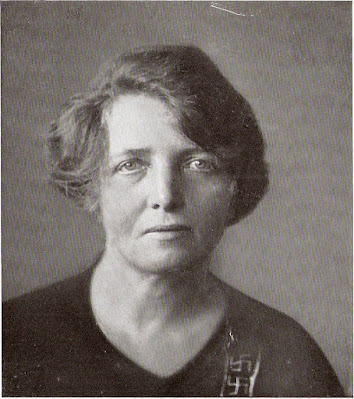
Rational Pluralism (Mathilde Ludendorff transformed) and Shintoism
Rational Pluralism's Approach to Shintoism: Pluralistic Resonance with Kami and HarmonyIntroductionRational Pluralism, as a contemporary religion refined through scientific scrutiny and metaphysical pluralism, envisions reality as an intricate interplay of multiple irreducible essences—fundamental forces including continuity (persistence across generations), emergence (complexity from simplicity), adaptation (resilience to change), aesthetics (beauty beyond utility), goodness (ethical harmony), truth (epistemic clarity), beauty (aesthetic unity), and relationality (discerning bonds of love and aversion). Drawing from evolutionary biology, quantum indeterminacy, and a pluralized Kantian noumena (diverse forces manifesting phenomena), it defines life's purpose as conscious participation in these essences, culminating in "God-living"—a timeless, purposeless state of fulfillment achieved before death.Shintoism, Japan's indigenous animistic-polytheistic tradition with roots predating recorded history (formalized around the 8th century CE in texts like Kojiki and Nihon Shoki), reveres kami—spirits or divine essences inhabiting nature, ancestors, and phenomena. Lacking a founder or central dogma, it emphasizes purity (misogi), harmony with nature (wa), rituals (matsuri), and ethical living through sincerity (makoto) and respect for interconnectedness. Shinto focuses on this-worldly prosperity, community, and cyclical renewal, often syncretizing with Buddhism (Shinbutsu-shugo).Rational Pluralism approaches Shintoism with profound affinity yet critical refinement: it celebrates Shinto's animistic multiplicity and natural harmony as embodying aesthetic and relational essences but critiques its ritualistic polytheism as potentially fragmented. This essay explores similarities (e.g., essence-infused nature), differences (polytheism vs. pluralism), critiques (e.g., ritual's purpose), and synergies (e.g., kami as essences), positioning RP as an evolutionary synthesis of Shinto insights.Similarities: Shared Animism and Natural HarmonyRational Pluralism and Shintoism converge in their reverence for an infused, harmonious world. Shinto's kami—divine presences in mountains, rivers, trees, and ancestors—align with RP's essences: pervasive forces animating phenomena, fostering aesthetics (beauty in nature's forms) and relationality (bonds with environment/spirits). Both view reality as alive with inherent vitality: Shinto's animism echoes RP's plural manifestation—essences like adaptation in seasonal cycles or continuity in ancestral veneration.Ethical harmony unites them: Shinto's makoto (sincerity) and wa (peaceful unity) parallel RP's goodness and relational discernment—ethical actions foster balance without dogma. Rituals like misogi (purification) resonate with RP's self-examination: cleansing for essence-alignment, transcending superficial strife. Shinto's this-worldly focus—prosperity through harmony—mirrors RP's pre-death fulfillment: conscious essence-participation yields stability.Non-theistic/polytheistic flexibility converges: Shinto lacks a supreme creator, emphasizing lived harmony; RP's impersonal essences prioritize free-will integration over hierarchical deities.These parallels frame Shinto as an animistic ally to RP's pluralism—both infuse existence with sacred multiplicity.Differences: Fragmented Polytheism Versus Integrated PluralismOntological cores differ: Shinto's polytheism/animism posits countless kami as distinct yet interconnected spirits, without ultimate unification—diversity in sacred presences. RP counters with pluralism: essences are irreducible and interactive, forming stable harmony without fragmentation—multiplicity as cohesive forces, not myriad entities.Temporally, Shinto's cyclical renewal (e.g., seasonal festivals) contrasts RP's timeless "outside spacetime": essences transcend cycles, accessible via God-living, emphasizing evolutionary emergence over ritual repetition.Ethically, Shinto's li-like rituals (matsuri for kami appeasement) emphasize communal propriety; RP demands discerning essence-cultivation, integrating survival/relations without prescribed rites. Shinto's purity focuses on external harmony; RP internalizes via free will.RP thus differentiates by integration: Shinto's polytheism stabilizes via diversity; RP via plural essences' interplay, avoiding potential ritualism.Critiques from Rational PluralismRational Pluralism critiques Shintoism for limitations in its animistic polytheism. First, kami's fragmentation risks superficiality: myriad spirits may dilute discernment, fostering ritual over essence-depth—e.g., appeasement as utility, not transcendent harmony. RP argues pluralism anchors multiplicity in stable forces, countering potential animistic relativism.Second, this-worldly ritualism undervalues noumenal transcendence: Shinto's focus on prosperity/harmony ignores RP's "beyond" as essence-realm, potentially trapping in phenomenal cycles.Third, syncretism (e.g., with Buddhism) accommodates but lacks RP's scientific grounding: rituals evolve culturally, but RP integrates evolution/quantum for metaphysical stability.Finally, Shinto's impersonality, while appreciated, risks depersonalizing ethics; RP's relational essence demands discerning love/aversion, fostering active bonds over passive reverence.These critiques depict Shinto as vibrant yet ritually constrained—RP pluralizes for deeper integration.Potential Synergies: Enriching Pluralism with Shinto AnimismDespite critiques, Rational Pluralism finds synergies with Shintoism, enhancing its framework. Shinto's kami complement RP's essences: spirits as manifestations (e.g., nature-kami embodying aesthetics/adaptation), infusing pluralism with animistic vitality.Wa/makoto refine RP's relational/goodness: harmonious discernment as essence-alignment, fostering plural balance. Matsuri's communal rituals bolster RP's relationality: celebrate essence-interplay via festivals, integrating without dogma.Synergistically, RP pluralizes Shinto: kami as diverse essences, enriching animism with scientific depth—e.g., wa reframed as plural harmony.This integration elevates both: Shinto gains metaphysical pluralism; RP, deeper natural ethics.ConclusionRational Pluralism approaches Shintoism as an animistic counterpart, sharing infused harmony and ethical discernment while critiquing its polytheistic fragmentation. Similarities in multiplicity provide synergy; differences in ontology highlight RP's pluralistic integration. Critiques underscore constraints, yet synergies enrich—pluralizing kami for dynamic fulfillment. Ultimately, RP evolves Shinto insights into a scientifically attuned pluralism, empowering conscious essence-harmony in an animated cosmos.

Comments
Post a Comment