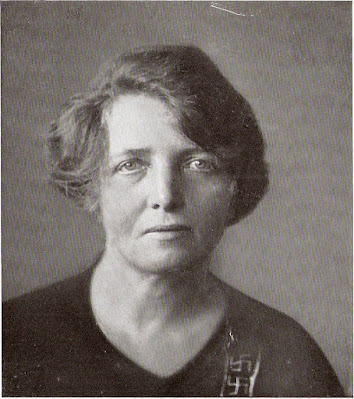
Rational Pluralism (Mathilde Ludendorff transformed) and existentialism
Rational Pluralism and Existentialism: Pluralistic Meaning in an Absurd CosmosIntroductionRational Pluralism (RP) represents a modern religious and philosophical system that integrates scientific empiricism with metaphysical pluralism. It conceives of reality as a dynamic interplay of multiple irreducible essences—fundamental forces including continuity (persistence across generations), emergence (complexity from simplicity), adaptation (resilience to change), aesthetics (beauty beyond utility), goodness (ethical harmony), truth (epistemic clarity), beauty (aesthetic unity), and relationality (discerning bonds of love and aversion). These essences, impersonal and noumenal, manifest in the phenomenal world of space, time, and causality, while existing timelessly "outside" these constraints. RP's core tenet is that life's purpose lies in conscious, free-will participation in these essences, achieving "God-living"—a state of timeless fulfillment realized before death, grounded in evolutionary biology, quantum principles, and a pluralized Kantian framework.Existentialism, a 19th-20th century philosophical movement, emphasizes individual existence, subjective experience, and the human condition in an absurd, meaningless universe. Key figures like Søren Kierkegaard (faith as leap), Friedrich Nietzsche (will to power, eternal recurrence), Martin Heidegger (Being and authenticity), Jean-Paul Sartre (existence precedes essence, radical freedom), and Albert Camus (absurdity and rebellion) reject objective meaning, asserting that individuals must create their own through authentic choices amid freedom, anxiety (angst), and responsibility. Existentialism often critiques religion as bad faith, favoring atheism or subjective theism.RP approaches existentialism with critical empathy: it shares existentialism's emphasis on free will, authenticity, and self-creation as paths to meaning but critiques its often nihilistic absurdity and individualism as insufficiently pluralistic. RP reframes existential themes through essences, offering structured harmony where existentialism sees void. This essay explores similarities (e.g., free-will agency), differences (absurdity vs. plural purpose), critiques (e.g., existential isolation), and synergies (e.g., authentic essence-fulfillment), positioning RP as an evolutionary response to existential concerns.Similarities: Freedom, Authenticity, and Self-CreationRP and existentialism converge in their valorization of human agency and the imperative to forge meaning through choice. Existentialism's core axiom—"existence precedes essence" (Sartre)—asserts that humans are born without predefined purpose, condemned to freedom and responsibility for self-definition. RP echoes this: essences provide potentials, not predeterminations; free will enables discerning participation, creating moral-self through alignment (e.g., relational bonds via choice, not fate).Authenticity is central: Heidegger's Dasein calls for owning one's Being amid thrownness; RP demands self-examination to align with essences, rejecting inauthentic utility-driven lives (e.g., ambition as "bad faith"). Kierkegaard's leap of faith into subjective truth parallels RP's intuitive leap to God-living—both transcend rational limits for fulfillment.Angst and responsibility unite them: existential dread from freedom's burden (no God-given meaning) resonates with RP's confrontation of mortality—death's inevitability spurs essence-cultivation, transforming anxiety into discerning action. Nietzsche's eternal recurrence—live as if repeating eternally—aligns with RP's continuity: actions echo timelessly in essence-harmony.These similarities frame existentialism as an individualistic ally to RP's pluralism—both empower self-creation in a non-prescriptive cosmos.Differences: Plural Harmony Versus Absurd IsolationOntological divergences are stark: existentialism often posits an absurd, indifferent universe (Camus's Sisyphus myth) or godless void (Sartre's nausea), where meaning is human-constructed against nothingness. RP counters with pluralism: essences infuse purpose—interplay yields inherent harmony, not absurdity; life's meaning emerges from conscious participation, not arbitrary invention.Freedom differs: existentialism's radical freedom (Sartre: "man is condemned to be free") is absolute yet burdensome, without anchors. RP's free will is discerning within essences—choices align potentials, providing structure without determinism. Heidegger's Being-toward-death emphasizes finitude's angst; RP views death as renewal (emergence essence), fulfilling continuity timelessly.Ethically, existentialism rejects universals for subjective values (Nietzsche's übermensch creates beyond good/evil); RP grounds ethics in essences—universal yet plural, demanding balanced cultivation (e.g., goodness with relational discernment).RP thus differentiates by structured pluralism: existentialism's isolation stabilizes via defiance; RP via essence-interplay, avoiding nihilistic void.Critiques from Rational PluralismRP critiques existentialism for limitations in its absurd individualism. First, absurdity's nihilism risks despair: denying inherent meaning (e.g., Camus's rebellion as futile yet defiant) undervalues essences—evolutionary emergence infuses purpose, countering existential void with plural potentials.Second, radical freedom lacks discernment: Sartre's unanchored choices may foster ethical relativism; RP's relational/goodness essences demand wise aversion, rejecting arbitrary self-creation for balanced harmony.Third, isolationism overlooks interconnectedness: existentialism's focus on solitary authenticity (Heidegger's Mitsein as secondary) ignores RP's relational essence—bonds essential for fulfillment.Finally, anti-religious bias (Nietzsche's "God is dead") dismisses transcendent pluralism; RP integrates science/spirit, offering God-living as authentic transcendence without bad faith.These critiques depict existentialism as defiant yet isolating—RP pluralizes for communal stability.Potential Synergies: Enriching Pluralism with Existential AuthenticityDespite critiques, RP finds synergies with existentialism, enhancing its framework. Existentialism's authenticity complements RP's self-examination: align essences authentically, fostering plural discernment (e.g., Nietzsche's will to power as essence-cultivation).Freedom's burden refines RP's free will: existential angst spurs adaptation—confront absurdity via essence-harmony, transforming dread into fulfillment. Übermensch ideal bolsters RP's perfection: self-creation as essence-wholeness, integrating without nihilism.Synergistically, RP pluralizes existentialism: absurdity as misperceived pluralism—essences provide meaning-framework, enriching freedom with diverse anchors.This integration elevates both: existentialism gains metaphysical pluralism; RP, deeper authentic ethics.ConclusionRational Pluralism approaches existentialism as an individualistic counterpart, sharing freedom and self-creation while critiquing its absurd isolation. Similarities in agency provide synergy; differences in ontology highlight RP's pluralistic harmony. Critiques underscore constraints, yet synergies enrich—pluralizing existential authenticity for dynamic fulfillment. Ultimately, RP evolves existential insights into a scientifically attuned pluralism, empowering conscious essence-harmony in a meaningful, multifaceted cosmos.

Comments
Post a Comment