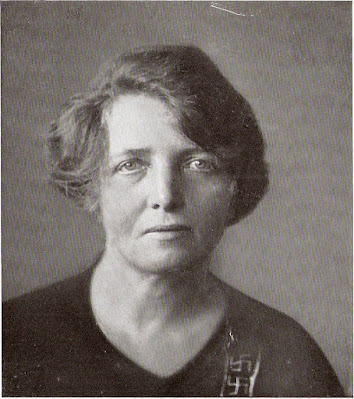
Rational Pluralism (Mathilde Ludendorff transformed) and freewill verse determinism
Rational Pluralism's Approach to Free Will Versus DeterminismIntroductionRational Pluralism (RP) stands as a contemporary religion that integrates scientific empiricism with metaphysical pluralism, rejecting both rigid monism and anthropomorphic theism. At its core, RP posits that reality is shaped by multiple irreducible essences—fundamental forces such as continuity (the persistence of patterns and life), emergence (the rise of complexity from simplicity), adaptation (resilience amid flux), aesthetics (beauty beyond utility), goodness (ethical harmony), truth (epistemic clarity), beauty (aesthetic unity), and relationality (discerning bonds of affinity and aversion). These essences interact dynamically in the phenomenal world of space, time, and causality, while existing noumenally "outside" these constraints. Life's purpose, in RP, is conscious participation in these essences through free will, achieving "God-living"—a timeless, purposeless state of fulfillment—before death.The debate between free will and determinism has long animated philosophy, theology, and science. Free will asserts that individuals possess genuine agency to make choices independent of prior causes, enabling moral responsibility and self-determination. Determinism, conversely, claims that all events, including human actions, are necessitated by antecedent causes—whether physical laws (causal determinism), divine predestination (theological), or psychological conditioning (compatibilist variants). RP approaches this dichotomy critically yet synthetically: it affirms free will as essential to essence-fulfillment while incorporating deterministic elements in the phenomenal realm, resolved through pluralistic metaphysics. Drawing from quantum indeterminacy and evolutionary emergence, RP posits that determinism operates within spacetime's constraints, but free will emerges noumenally, enabling discerning alignment with essences. This essay explores RP's stance, critiquing pure determinism, affirming free will, and synthesizing the two for ethical and metaphysical stability.The Metaphysical Foundation: Plural Essences and the Noumenal-Phenomenal DivideRP's metaphysics draws a Kantian-inspired distinction: the phenomenal "inside spacetime" is the observable domain governed by space, time, and causality, where essences manifest empirically—e.g., continuity in genetic inheritance, emergence in neural complexity. Here, deterministic patterns appear: classical physics suggested a clockwork universe, where prior states dictate futures, aligning with causal determinism. Yet, RP integrates modern science: quantum mechanics reveals indeterminacy (e.g., Heisenberg's uncertainty, wave function collapse), where probabilities, not certainties, rule subatomic behavior. This "quantum pluralism" mirrors essences' interplay—diverse forces yielding unpredictable yet patterned outcomes, undermining strict determinism.Noumenally, "outside spacetime," essences exist timelessly and acausally: a realm of pure potential, free from deterministic chains. God-living accesses this—conscious participation transcends causality, as intuition aligns choices with essences. RP thus rejects hard determinism: phenomenal laws are emergent from noumenal pluralism, not absolute. Free will operates here: not contra-causal liberty (libertarianism) but compatibilist discernment within plural possibilities, enabling moral agency.Critiquing Determinism: From Materialistic Chains to Plural ProbabilitiesRP critiques determinism as overly reductive, especially materialistic variants (e.g., Laplace's demon, where full knowledge predicts all). Evolutionary biology shows emergence defies predictability: consciousness arises unpredictably from neural interactions, reflecting essence-interplay beyond mechanical causation. Quantum indeterminacy further erodes determinism: superposition and entanglement suggest non-local, probabilistic realities—essences like adaptation thrive in uncertainty, not fixed laws.Theological determinism (e.g., predestination in Calvinism) fares worse: a singular divine will imposing fate contradicts RP's pluralism—no "god of gods" dictates; essences enable free alignment. Compatibilism (free will as acting per desires, even if determined) is partial: RP agrees desires (instincts) can be "determined" phenomenally but transcend via noumenal choice—discernment elevates instincts to essence-harmony.Determinism risks ethical nihilism: if actions are predetermined, responsibility dissolves. RP counters: pluralism's indeterminacy preserves agency, grounding morals in free essence-cultivation.Affirming Free Will: Discernment and Essence-AlignmentIn RP, free will is the capacity for discerning choice amid plural possibilities, enabling self-directed fulfillment. Noumenally, essences offer timeless potentials—free from causality—accessible via intuition. Phenomenally, will manifests in decisions: e.g., relationality discerns love/aversion ethically, adapting to circumstances without deterministic compulsion.Free will resolves death's paradox: somatic mortality (deterministic entropy) spurs noumenal emergence—conscious God-living fulfills continuity timelessly. Quantum analogies bolster: observer effects (measurement collapsing waves) metaphorize will as "collapsing" plural potentials into reality, affirming agency.Ethically, free will underpins morals: survival duties pragmatic, relational bonds discerning, essence-morals volitional—perfection via balanced cultivation. Without free will, essence-participation falters; RP affirms it as emergent essence, rejecting illusions of total freedom (libertarian) or illusionary (hard incompatibilist).Synthesizing Free Will and Determinism: Pluralistic ResolutionRP resolves the debate pluralistically: determinism governs phenomenal patterns (e.g., causal survival), but indeterminacy (quantum/emergent) allows noumenal free will—essences bridge, enabling choice within constraints. Adaptation essence illustrates: deterministic environments shape responses, yet relational discernment freely aligns.This synthesis enhances stability: determinism provides order (continuity), free will novelty (emergence)—plural balance counters extremes. Implications abound: ethics demand responsibility—free will enables moral growth; God-living transcends determinism's flux.ConclusionRational Pluralism approaches free will versus determinism as a false binary, critiquing determinism's reductionism while affirming free will as discerning essence-alignment. Through plural metaphysics—noumenal timelessness enabling choice amid phenomenal patterns—RP synthesizes: determinism structures the "inside," free will fulfills the "outside." This empowers ethical agency, resolving paradoxes for stable, conscious fulfillment in a plural cosmos.

Comments
Post a Comment