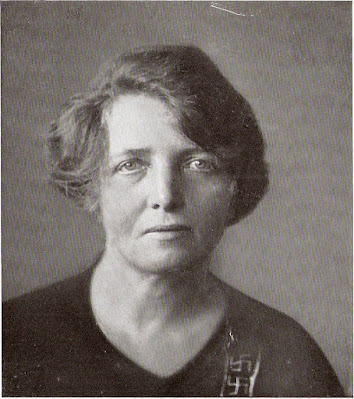
Rational Pluralism (Mathild Ludendorff transformed) and the question of the meaning of "outside spacetime"
Rational Pluralism: Navigating the Boundaries of Spacetime and the Meaning of the "Beyond"IntroductionRational Pluralism, as a scientifically grounded, metaphysically stable religion, reimagines human existence as a harmonious interplay of multiple irreducible essences—fundamental forces such as continuity, emergence, adaptation, aesthetics, goodness, beauty, truth, and relationality. Rooted in evolutionary biology, quantum indeterminacy, and a refined Kantian distinction between the phenomenal and noumenal realms, it rejects monistic unification in favor of pluralism: reality comprises diverse, coexisting principles that transcend singular causality or essence. This framework posits that life's purpose lies in conscious participation in these essences, achieving "God-living"—a timeless, spaceless state of fulfillment—before death.Central to Rational Pluralism is the question of spacetime: the "inside" (the phenomenal world governed by space, time, and causality) versus the "outside" (the noumenal beyond, where essences operate free of these constraints). This essay explores Rational Pluralism's view on this dichotomy, drawing from its evolutionary and philosophical foundations. It argues that "inside spacetime" represents the empirical arena of reason and survival, while "outside spacetime" symbolizes transcendent essence-interplay. Crucially, the question of "outside spacetime" is not only meaningful but essential to the ideology, as it provides the metaphysical bridge for ethical and spiritual growth, resolving apparent paradoxes of existence.The Phenomenal Realm: Inside Spacetime as the Arena of Reason and EmergenceIn Rational Pluralism, the "inside" of spacetime corresponds to the phenomenal world—the observable, measurable domain structured by space, time, and causality, as Kant originally delineated. This is the realm of empirical science, where evolutionary processes unfold: from unicellular continuity (potential immortality via division) to multicellular emergence (consciousness arising from somatic specialization). Here, essences manifest concretely—adaptation drives resilience in ecosystems, relationality fosters symbiotic bonds, and emergence yields human awareness from unconscious matter.Spacetime, in this view, is not a mere backdrop but an interactive fabric woven by plural forces. Quantum mechanics illustrates this: probabilistic essences (indeterminacy) underpin particle behavior, defying classical causality. Relativity further pluralizes—spacetime curves under gravity, revealing no absolute "inside" but relational dimensions. Evolution aligns: death's inevitability (entropy's role) enables diversity, as somatic mortality sacrifices for neural complexity, birthing reason. Humans, as "hyperzoans," consciousize this phenomenal flux via intellect, mastering threats (e.g., harnessing nature through technology) while grappling with impermanence.Yet, this inside realm is limited: reason excels at utility—survival morals (pragmatic duties for self/kin/community)—but falters beyond observables. Errors arise when spacetime's forms (time-bound goals, spatial hierarchies) impose on essences, fostering materialism or dogmatic religions that conflate the phenomenal with ultimate reality. Rational Pluralism warns: overreliance on "inside" logic breeds illusions, like eternal personal afterlife or endless progress to "superman," ignoring plural transcendence.The Noumenal Beyond: Outside Spacetime as Plural Essences and God-LivingContrasting the phenomenal "inside," the "outside" of spacetime in Rational Pluralism denotes the noumenal domain—timeless, spaceless, purposeless—where multiple essences exist intrinsically, unbound by causality. This is not a literal "exterior" space but a transcendent interplay: essences like continuity persist eternally, emergence defies linear time, and relationality connects without spatial limits. God-living—conscious participation in these—occurs here: a state of wholeness where joy/sorrow dissolve into equilibrium, fulfilling immortality pre-death.Drawing from Kant, the noumenal is "things-in-themselves," but pluralized: no singular "Thing Itself" (contra monism), but diverse forces animating phenomena. Quantum entanglement hints at this—non-local connections transcend spacetime—while evolutionary mneme (inherited potentials) echoes timeless continuity. Myths intuited it: paradise lost as unicellular eternity, selective beyond as essence-attainment.Outside spacetime, essences harmonize: beauty manifests beyond utility (e.g., floral symmetries for no "purpose"), truth as alignment without temporal proof. God-living accesses this via free will—meditation, art, inquiry—releasing from phenomenal fetters. Yet, it's not escapism: bridges (e.g., scientific insights, ethical acts) connect, spiritualizing drives (e.g., hate as discerning aversion to essence-harm).Is "Outside Spacetime" Meaningful in Rational Pluralism?The question of "outside spacetime" is profoundly meaningful in Rational Pluralism—indeed, central to its ideology. It is not a speculative void but the metaphysical ground for purpose: without transcending spacetime's limits, humanity remains trapped in phenomenal cycles of strife and decay. Meaning arises from this duality: the inside provides the arena for essence-manifestation (evolution's ascent to consciousness), while the outside offers fulfillment (God-living as eternal participation).Critically, "outside" is not literal separation—pluralism rejects dualistic rifts. Essences permeate both: phenomenal events (inside) as expressions of noumenal forces (outside), creating interplay. Quantum non-locality and holographic principles (e.g., universe as information projection) support this—spacetime emerges from deeper plural realities. Meaningful inquiry thus explores bridges: reason maps the inside, intuition accesses the outside, yielding ethics—survival aligns with essences, relational bonds spiritualize, morals fulfill wholeness.Without this question, pluralism collapses: denying "outside" yields materialism (Darwinian utility alone); overemphasizing it risks asceticism (fleeing phenomena). Rational Pluralism balances: the query drives discernment, resolving death's paradox (mortality enables emergence) and life's meaning (conscious essence-harmony). It empowers: humans, as cosmic consciousizers, bridge realms via free will, transcending entropy for metaphysical stability.Conclusion: Implications for Existence and IdeologyRational Pluralism's view of inside/outside spacetime reframes human destiny: the phenomenal inside as evolutionary crucible, forging consciousness amid space-time-causality; the noumenal outside as plural essences' realm, where fulfillment awaits beyond limits. The question's meaningfulness underscores the ideology's core—pluralism as dynamic unity, where transcendence integrates, not escapes, existence. This fosters ethical vitality: live essences consciously, achieving immortality in timeless harmony. In a fragmented world, it calls for pluralism's embrace—diverse forces yielding wholeness, guiding humanity toward enlightened, stable coexistence.

Comments
Post a Comment