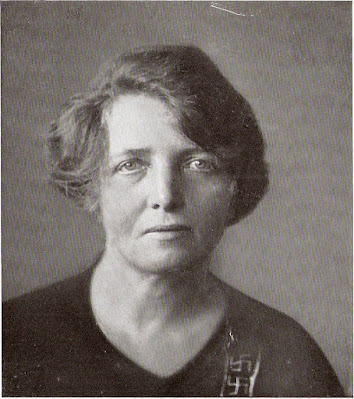
Meditation techniques for Cosmic Rationalism (Mathilde Ludendorff reimagined)
Cosmic Rationalism's Meditation Techniques: Practices for Emergent Awareness and Ethical AdaptationIn a world inundated with distractions and existential uncertainties, meditation offers a pathway to inner clarity and resilience. Cosmic Rationalism, a philosophical framework rooted in empirical science and emergent naturalism, integrates meditation not as a mystical ritual but as an evidence-based tool for fostering awe, self-reflection, and adaptive growth. Drawing from neuroscience, evolutionary psychology, and mindfulness research, it views meditation as a means to harness neuroplasticity—the brain's ability to rewire itself—aligning evolved instincts with higher capacities like empathy, creativity, inquiry, and relational bonds. Reinvented from Mathilde Ludendorff's vitalistic ideas but stripped of pseudoscience, Cosmic Rationalism reframes meditation as a technique for "God-living": Peak states of flow and transcendence that evoke cosmic awe without supernaturalism, enabling humans to build meaningful legacies amid transience. This essay explores Cosmic Rationalism's meditation techniques: Their scientific foundations, core practices, and role in achieving emergent perfection through rational, purposeful living.Scientific Foundations: Meditation as Neuroplastic AdaptationCosmic Rationalism grounds meditation in brain science, rejecting esoteric claims for testable mechanisms. Neuroplasticity, confirmed by studies like those using fMRI, shows how repeated practices reshape neural pathways—e.g., mindfulness thickens the prefrontal cortex (enhancing executive function) and shrinks the amygdala (reducing stress reactivity). This aligns with the ideology's emergent ethos: Consciousness arises from evolutionary adaptations, where meditation integrates instincts (e.g., fight-or-flight) into values (e.g., empathy via mirror neuron activation).In this view, meditation catalyzes "legacy-drive"—the evolved imperative for persistence—by refining conscience (as social cognition) and inducing flow states, per Mihaly Csikszentmihalyi's research: Optimal experiences where time dissolves, fostering timeless awe akin to "God" as metaphor for cosmic mystery. Evolutionary psychology elaborates: Meditation's roots in ancient practices (e.g., Vedic dhyana) served adaptive purposes like reducing anxiety in uncertain environments, now evidenced by reduced cortisol in meditators. Cosmic Rationalism thus positions meditation as rational self-optimization: Not escaping reality, but adapting to it for harmonious flourishing.Core Techniques: Practical Pathways to Awe and IntegrationCosmic Rationalism's techniques are adaptive, evidence-informed, and flexible—tailored to individual contexts, emphasizing integration over dogma. They draw from mindfulness-based stress reduction (MBSR), loving-kindness (metta), and breathwork, refined for cosmic themes: Awe from emergence, reflection on transience, and ethical alignment.
- Awe-Focused Contemplation: Begin with 10-20 minutes daily observing natural or scientific phenomena (e.g., stargazing or visualizing quantum entanglement). Technique: Sit comfortably, breathe deeply, and reflect on cosmic unity—shared evolutionary ancestry evoking empathy. Science: Activates default mode network for introspection, fostering awe's dopamine rewards to counter nihilism. Goal: Evoke "cosmic awe," integrating truth/inquiry for legacy awareness (e.g., "How does my life contribute to emergent patterns?").
- Breathwork for Flow Integration: Use rhythmic breathing (e.g., 4-7-8 technique: Inhale 4 seconds, hold 7, exhale 8) to induce gamma synchrony—neural waves linking brain regions for "God-living." Elaborate: Visualize instincts (hunger/fear) harmonizing with capacities (empathy/creativity), like evolutionary branches converging. Evidence: Breathwork reduces amygdala activity, enhancing neuroplasticity for habit refinement. Application: During stress, adapt responses ethically—e.g., channel "hate" (threat detection) into resolution.
- Reflective Journaling Meditation: Combine mindfulness with writing: Meditate 15 minutes on a day's events, then journal reflections aligned with capacities (e.g., "How did empathy foster a bond today?"). Technique: Focus on breath, then probe biases (confirmation/availability) via inquiry. Science: Journaling builds prefrontal resilience, refining conscience as evolvable tool. Purpose: Counter self-deception, adapting morals for growth—elaborate legacy plans (e.g., sustainable actions).
- Loving-Kindness Expansion: Start with self-compassion (e.g., "May I adapt resiliently"), extend to loved ones, then discriminately to others/world (e.g., "May ecosystems thrive"). Science: Metta boosts oxytocin, strengthening bonds/empathy; fMRI shows increased gray matter in empathy regions. In Rationalism: Discriminate—love allies enhancing legacy, "hate" harms ethically—to foster relational harmony without indiscriminate altruism.
- Transience Visualization: Meditate on finitude (e.g., imagine life's timeline from Big Bang to personal end), evoking urgency for legacy. Technique: Guided imagery of emergent cycles (e.g., stellar death birthing elements), affirming awe. Evidence: Mortality salience (terror management theory) motivates prosocial legacy-building. Goal: Catalyze adaptation—integrate capacities for ethical impacts.

Comments
Post a Comment