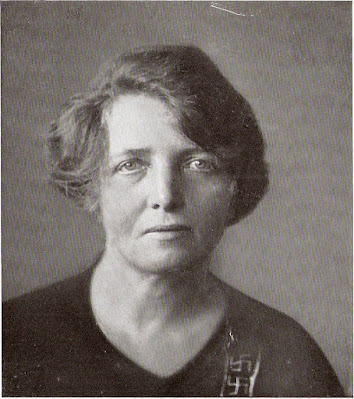
Comparing Rational Pluralism (Mathilde Ludendorff transformed) to Whitehead
Comparing Whitehead's Eternal Objects and Rational Pluralism's Essences: Metaphysical Potentials in Process and PluralismIntroductionAlfred North Whitehead's process philosophy, particularly as articulated in Process and Reality (1929), represents a landmark in 20th-century metaphysics, integrating scientific insights from relativity and quantum mechanics with a dynamic ontology of becoming. Central to this system are "eternal objects," abstract, timeless forms that provide potentiality and definiteness to the actual world. Rational Pluralism (RP), a contemporary metaphysical religion, posits a pluralistic reality composed of multiple irreducible essences—fundamental forces like continuity, emergence, adaptation, aesthetics, goodness, truth, beauty, and relationality—that underpin existence without monistic unification. Drawing from evolutionary biology, quantum principles, and a pluralized Kantian noumena, RP emphasizes conscious participation in these essences for fulfillment.Both systems address how abstract potentials structure reality: Whitehead's eternal objects as pure forms of definiteness in a processual cosmos, and RP's essences as diverse noumenal principles manifesting in phenomena. This essay compares them, highlighting similarities in their timeless, potential-giving roles; differences in ontological structure (monistic process vs. irreducible pluralism); and implications for ethics and metaphysics. Ultimately, RP evolves Whitehead's insights by pluralizing them, enhancing stability through multiplicity.Whitehead's Eternal Objects: Timeless Potentials in a World of BecomingIn Whitehead's process metaphysics, eternal objects are abstract, timeless entities that serve as "pure potentials" or "forms of definiteness." They are the eternal, unchanging possibilities that "ingress" into actual occasions—the basic units of reality in constant becoming (concrescence). Eternal objects include qualities like colors, shapes, mathematical forms, logical relations, and even aesthetic or ethical ideals—anything that provides structure or character to experience. These objects are Platonic in flavor—abstract and independent of time—yet integrated into a temporal process: they lure actual entities toward novelty and value, mediated by God's primordial nature (eternal objects as divine envisagement). In Whitehead's dipolar God—primordial (abstract, eternal) and consequent (concrete, temporal)—eternal objects reside in the primordial pole, offering infinite potentials for the world's creative advance. They are not "essences" in a static Aristotelian sense but dynamic lures, enabling the universe's perpetual novelty while ensuring coherence. Ethically, eternal objects underpin values: moral ideals like justice or beauty are eternal potentials actualized in human decisions, aligning with process theology's emphasis on persuasive divine influence. Rational Pluralism's Essences: Irreducible Forces in a Plural CosmosIn RP, essences are noumenal principles—impersonal, timeless forces underlying reality's diversity. Unlike Whitehead's eternal objects, they are not infinite abstractions but a finite set of core forces: continuity ensures renewal (e.g., genetic legacies), emergence drives consciousness (e.g., from unicellular to multicellular), adaptation fosters resilience (e.g., ecological symbiosis), aesthetics and beauty infuse harmony (e.g., natural symmetries), goodness promotes ethical balance, truth aligns conception with reality (e.g., scientific inquiry), and relationality discerns bonds (e.g., love/aversion for growth).Essences manifest phenomenally—inside spacetime—while existing noumenally outside, accessible via intuition and God-living. They lack hierarchy: each specialized, their power emerges from interplay, providing stability through balance. Ethically, essences derive morals: survival (continuity/adaptation), relational (minne via relationality/aesthetics), and life (holistic fulfillment).Similarities: Abstract Potentials, Timelessness, and Ethical LuresBoth eternal objects and essences function as timeless potentials structuring reality. Whitehead's eternal objects as "pure potentials" for definiteness parallel RP's essences as foundational forces enabling manifestation—e.g., mathematical/logical objects akin to truth, aesthetic qualities to beauty/aesthetics. Both are impersonal and abstract: eternal objects ingress without agency; essences manifest noumenally.Dynamic roles converge: Whitehead's luring toward novelty/value echoes RP's essence-participation—ethical/moral ideals as potentials (eternal objects) or forces (goodness/truth) guiding free will. Integration with science unites: Whitehead's processual evolution aligns with RP's emergence/adaptation. These similarities highlight shared commitments to potential-driven, processual metaphysics.Differences: Monistic Lures Versus Plural ForcesOntologically, Whitehead's eternal objects are monistically tied to God's primordial nature—infinite possibilities within a dipolar unity. RP's essences are plural and independent—finite, irreducible principles without divine enclosure.Functionally, eternal objects lure persuasively in temporal becoming; RP's essences enable timeless God-living, emphasizing pre-death fulfillment over ongoing process. Ethically, Whitehead's value-lures imply teleology; RP rejects purpose, viewing fulfillment as purposeless harmony.RP differentiates by irreducible plurality: Whitehead's monism stabilizes via divine unity; RP via essence interplay, avoiding singular mediation.Implications: Ethics, Stability, and Human RoleWhitehead's system yields process theology: ethical co-creation with a persuasive God. RP's pluralism empowers free-will essence-fulfillment, rejecting divine lures for discerning integration—greater autonomy, yet shared emphasis on relational ethics.Metaphysically, Whitehead's infinite objects enable endless novelty; RP's finite essences ensure bounded stability, countering potential chaos.Humanity's role: both elevate consciousness—Whitehead as creative advance; RP as essence-consciousizers—yet RP universalizes without theistic dependence.ConclusionWhitehead's eternal objects and RP's essences both provide abstract potentials for reality's structure, sharing timelessness and ethical guidance. Similarities in dynamic metaphysics foster synergy; differences in ontology—monistic lures vs. plural forces—highlight RP's depth. RP evolves Whitehead by pluralizing, achieving stable, purposeless fulfillment in a multifaceted cosmos.

Comments
Post a Comment